
Cheerful giving. The pebble in my shoe.
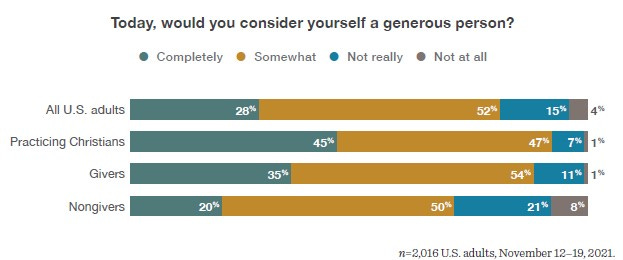
Want to know one of the most challenging verses in the Bible for me? “God loves a cheerful giver”. A harmless enough verse, right? Well, not for me. For me, it’s a reminder of my lack of cheerful givingness (a word I made up).
And like a pebble in my shoe, what started out as a slight annoyance has grown into all I think about. I’m borderline consumed with the question, “Why don’t I feel cheerful when I give?”
If I’m honest, when Lauren and I do our monthly giving, it feels about the same as paying our monthly electricity bill. Which is to say, not very cheerful. And the fact that I’m supposed to be cheerful makes it worse.
So, in an effort to increase my cheerfulness, I’ve tried all sorts of techniques to increase my cheer quotient. Giving more. Turning off the autopay. Giving before I pay for anything else. Unfortunately, none of them really moved the needle.
But then I had an idea. I decided to look outward rather inward. Rather than the intense naval-gazing I’m prone to, I asked others about their giving experiences and inspected what the Bible has to say.
I looked at things like: what are some common traits of the early church’s giving? What are some common traits of those people I know that do cheerfully give?
And it turns out there are some common principles that influence joy and cheerfulness. Here’s what I’ve found.
Relational giving increases joy and cheerfulness

The first giving principle I’ve learned is this: the closer you are to the recipient of the gift, the more joy you experience. This is the anti “Your Tax Dollars at Work” approach. That approach puts lots of people between your gift and the recipient. And I think the more people that are put between your gift and the recipient, the less likely you are to experience joy.
Milton Friedman agrees and calls it “spending other people’s money on someone else”. To be fair, Friedman was not talking about an emotional response to giving, rather the inefficiency of government. But I think the principle still applies.
Here are a couple examples:
“And all the believers met together in one place and shared everything they had. They sold their property and possessions and shared the money with those in need.” (Acts 2:44-45)
The church was only large enough to meet in “one place”. Sharing with those in need meant they shared with people they knew. The giving described in this passage was fundamentally relational.
Here’s another example from outside of the Bible.
Recently, a mentor of mine took a trip to visit one of his close friends. His friend also happens to be a missionary. And he has supported this friend for decades. When I’ve probed him in the past about what gives his heart joy, he always mentions supporting this friend. It’s not an accident (in my opinion) that one of the most cheerful giving experiences he has is supporting a close friend.
I think this relational aspect makes perfect sense. God has designed us to be relational. And the more relationships and community play into the gift, the more likely we are to experience joy and cheerfulness. In my own experience, I have seen this play out as well. When I think back to when I have experienced more joy in giving, personal relationships have been a central theme.
Not feeling the joy? Look for opportunities to help within your relational community.
Being involved increases joy and cheerfulness
The second giving principle I’ve learned is to get involved.
I recently attended an NCF giving celebration. The speaker at the event had a tremendous amount of insights on giving. But the one that stood out to me was this: he was involved with all the charities he and his wife gave to.
This isn’t the first time I’ve heard this. When I look back at my friends who have the most joy, they all are involved with the charities they give to. They don’t just give their money; they give their time and talents also.
I received similar feedback when I interviewed a retiree regarding his family’s giving habits. One of the central criteria they use to direct their giving is whether they “participate in directly or serve them in some way.”
Yes, this minimizes the number of organizations they can give to. But they choose quality over quantity. They’ve chosen to maximize their kingdom impact by focusing their time, talent, and treasure to a select number of organizations. Rather than a shotgun approach, they take a rifled approach.
The gospel increases joy
What if it’s not possible to have a relational connection or be personally involved? Great question. The third giving principle I’ve learned is this: nothing increases joy like remembering the gospel. The early church provides a great example when famine struck Jerusalem.
Paul helped provide support for them by taking an offering from churches outside of Jerusalem. There likely was not a direct relational connection between these new churches and the Jerusalem church (principle 1) and the churches likely could not directly help (principle 2). But, as we can see below, they gave with great joy.
“Now I want you to know, dear brothers and sisters, what God in his kindness has done through the churches in Macedonia. They are being tested by many troubles, and they are very poor. But they are also filled with abundant joy, which has overflowed in rich generosity.
For I can testify that they gave not only what they could afford, but far more. And they did it of their own free will. They begged us again and again for the privilege of sharing in the gift for the believers in Jerusalem. They even did more than we had hoped, for their first action was to give themselves to the Lord and to us, just as God wanted them to do.” (2 Corinthians 8:1-5)
The Macedonians had neither of the principles mentioned above. But they had an “abundant joy”. They, in fact, begged to give. Where did this come from? They recognized the opportunity to show the grace they themselves had received.
For me, this drives me to pray. Even when utilizing the principles above, ultimate joy really only comes from knowing the grace granted to me. Peter mentions this in 2 Peter as well. After a long list of characteristics he wants his readers to exemplify, he doesn’t appeal to discipline or willpower. He appeals to their memories. They need to remember how much they’ve been forgiven.
“The more you grow like this, the more productive and useful you will be in your knowledge of our Lord Jesus Christ. But those who fail to develop in this way are shortsighted or blind, forgetting that they have been cleansed from their old sins.” (2 Peter 1:8-9)
I can’t conjure up this joy without my heart remembering the gospel.
It’s possible
Being a cheerful giver is possible. I’ve seen it with my own eyes. That’s what keeps me going. Relationships and involvement are key, but more than anything, it’s about asking God to remind my heart of the gospel. Not to get too grandiose, but I think this is the real key to unlocking generosity among Christians: more joy, less guilt, and hearts transformed by the gospel.
PS – I’d love to hear your own giving journey – struggles, principles, victories. Please share your own experiences!
Disclosure: All written content on this site is for information purposes only. Opinions expressed herein are solely those of Ridley Wealth Management, LLC and our editorial staff. Material presented is believed to be from reliable sources; however, we make no representations as to its accuracy or completeness. All information and ideas should be discussed in detail with your individual adviser prior to implementation. Advisory services are offered by Ridley Wealth Management, LLC. Being registered as a registered investment adviser does not imply a certain level of skill or training.
The presence of this web site shall in no way be construed or interpreted as a solicitation to sell or offer to sell investment advisory services to any residents of any State other than the State of Texas or where otherwise legally permitted. All written content is for information purposes only. It is not intended to provide any tax or legal advice or provide the basis for any financial decisions. All investing involves risk including loss of principal. Past performance does not guarantee future results.
Ridley Wealth Management, LLC is not affiliated with or endorsed by the Social Security Administration or any government agency.
Images and photographs are included for the sole purpose of visually enhancing the website. None of them are photographs of current or former Clients. They should not be construed as an endorsement or testimonial from any of the persons in the photograph.